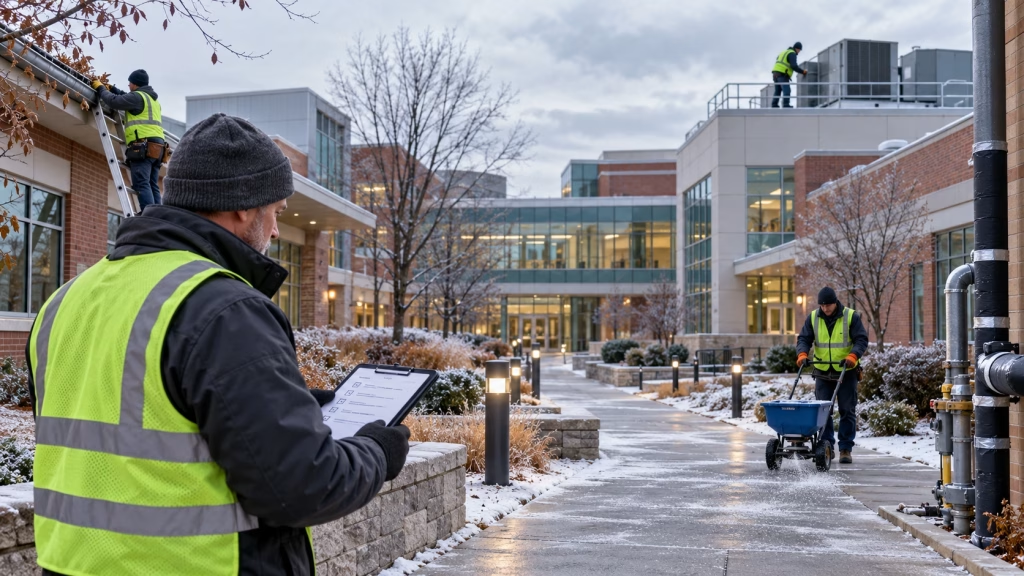
Winterizing a multi-building campus means preparing the heating, plumbing, roofing, and life safety systems in every building before temperatures drop below freezing, along with the water lines, walkways, and outbuildings that connect them. JDB Service Group completes this work for senior living communities, behavioral health centers, and human services campuses across southeastern Pennsylvania, one building at a time and on one schedule.
Why a Campus Is Harder to Winterize Than a Single Building
A single building has one set of systems to prepare. A campus has several buildings of different ages, each with its own boiler or furnace, its own shutoff valves, and its own weak points. A freeze in any one of them can mean water damage, a heating outage, or residents moved to another building on short notice.
The risk also sits in the spaces between buildings. Facility directors at senior living communities, IDD residential programs, and behavioral health centers usually point to the same trouble spots:
- Water lines, hose bibs, and irrigation that run between buildings or out to garages and sheds
- Lightly used buildings, such as a chapel, gym, or administration office closed on weekends, where a heating failure can go unnoticed for days
- Older and newer buildings side by side, with different heating systems and controls
- Walkways, ramps, and covered paths that residents and staff use to move between buildings
- Separate mechanical rooms and shutoffs in every building, which slow down any response if a pipe breaks
JDB Service Group handles campus winterization as part of its commercial property maintenance programs, so every building is prepared to the same standard instead of whichever building had time left over.
When Should Commercial Building Winterization Start in Southeastern Pennsylvania?
Commercial building winterization should start in September and be finished before the first freeze. Philadelphia’s official first freeze has historically averaged early November, but suburban campuses in Montgomery, Bucks, and Chester Counties often reach freezing earlier, sometimes in late October. JDB Service Group schedules campus winterization early so heating repairs and parts orders are done before cold-weather demand peaks.
Starting early also leaves time to fix what the inspection finds. A cracked heat exchanger or a failed heat trace cable is a routine repair in October. The same problem found during the first cold snap becomes an emergency.
What Does a Facility Winterization Checklist Cover?
A facility winterization checklist for a multi-building campus covers six areas in every building: heating, plumbing and freeze protection, roof and drainage, the building envelope, life safety and backup power, and grounds and walkways. JDB Service Group works through each area building by building and records every finding in one work-order list for the whole campus.
Heating Systems
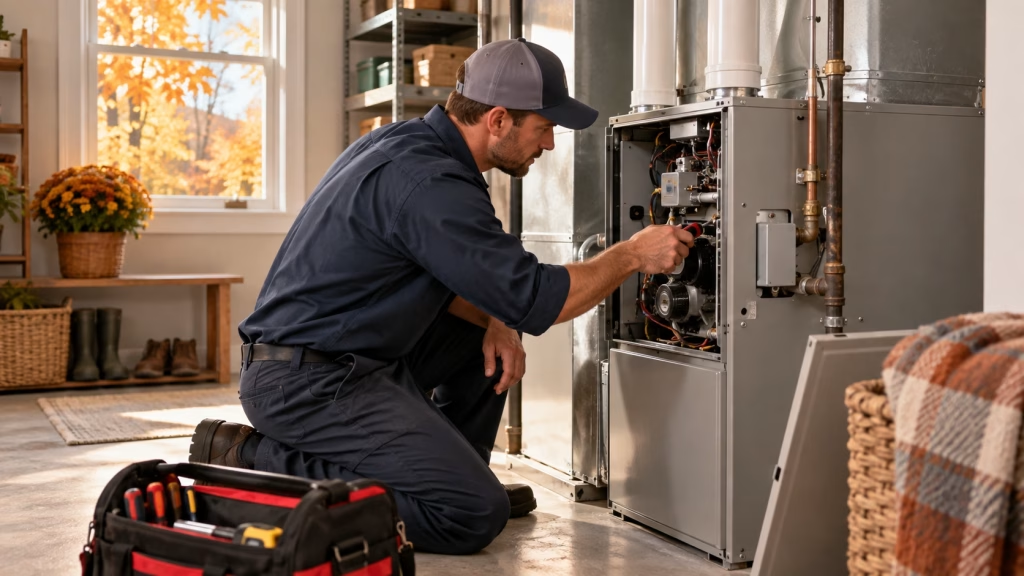
- Boilers, furnaces, and rooftop units serviced and tested under load before they are needed
- Thermostats and building automation setpoints checked, including low-temperature alarms
- Heat confirmed in mechanical rooms, stairwells, vestibules, and other spaces where pipes run near outside walls
- Unit heaters in garages, maintenance shops, and storage buildings tested
Heating equipment gets the most attention because it protects everything else. Our fall heating system prep plan covers this part of the work in more detail.
Plumbing and Freeze Protection
- Exterior hose bibs and irrigation lines drained and shut off for the season
- Pipes in crawl spaces, attics, and exterior walls checked for insulation or heat trace
- Heat trace cables tested and backflow preventers protected from the cold
- Main and branch shutoff valves located, tagged, and tested in every building
Roof, Gutters, and Drainage
- Gutters and downspouts cleared after the leaves fall
- Roof drains and scuppers on flat roofs cleared so meltwater has somewhere to go
- Flashing, seams, and roof penetrations checked for gaps that let ice and water in
- Downspout discharge directed away from walkways, where runoff can refreeze
Many of these items carry over from the pre-fall roof and gutter audit, which is best done before winterization begins.
Building Envelope
- Weatherstripping and door sweeps replaced on exterior doors
- Door closers adjusted so exterior doors close and latch fully
- Gaps around windows, vents, and wall penetrations sealed
A door that does not close fully can freeze the pipes in the wall next to it overnight. On a campus with heavy foot traffic, this is one of the most common causes of a winter pipe break.
Life Safety and Backup Power
- Generators tested under load, with fuel levels and transfer switches confirmed
- Emergency lighting and exit signs tested in every building
- Carbon monoxide detectors checked near boilers, furnaces, and other fuel-burning equipment
- Heat confirmed in sprinkler riser rooms, and fire protection inspection records confirmed current
Grounds and Walkways
- Cracked walkways, loose handrails, and damaged ramp surfaces repaired
- Lighting along paths between buildings checked and replaced as needed
- Low spots where water collects and ices over marked for repair
- A snow and ice plan set, with priority routes for resident entrances and emergency access
JDB Service Group winterizes multi-building campuses for senior living communities, behavioral health centers, IDD residential programs, and human services organizations across southeastern Pennsylvania. The company inspects heating, plumbing, roofing, life safety, and grounds in every building before the first freeze, then tracks each repair through one work-order list for the whole campus.
How JDB Service Group Winterizes a Multi-Building Campus
JDB Service Group winterizes a campus in a set order: walk every building, rank what we find by freeze risk, complete the repairs, document the work, and check back once the cold arrives. The result is a campus where every building is prepared to the same standard, and the facility director has a record of what was done and where.
Step 1: Walk Every Building on the Campus
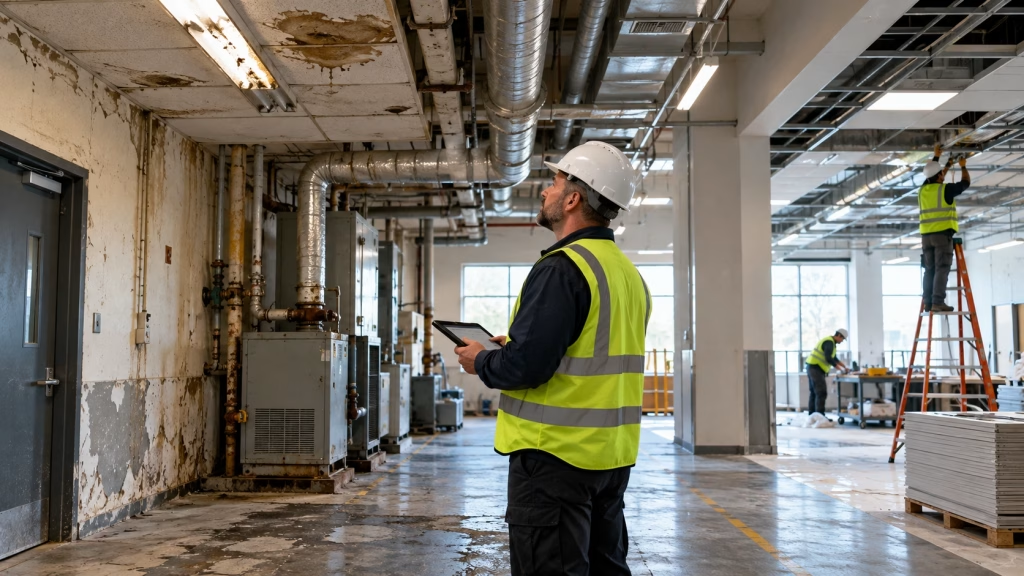
The walkthrough covers every building, including garages, sheds, and buildings that are only used part of the week. Our team records each heating system, shutoff location, and known problem so the campus has one complete picture before any work begins.
Step 2: Rank Findings by Freeze Risk
Buildings where residents live come first. Within each building, items that can cause heat loss or water damage are handled before items that affect comfort or appearance. This order puts the limited time before the first freeze where it matters most.
Step 3: Complete the Repairs and Winterization Work
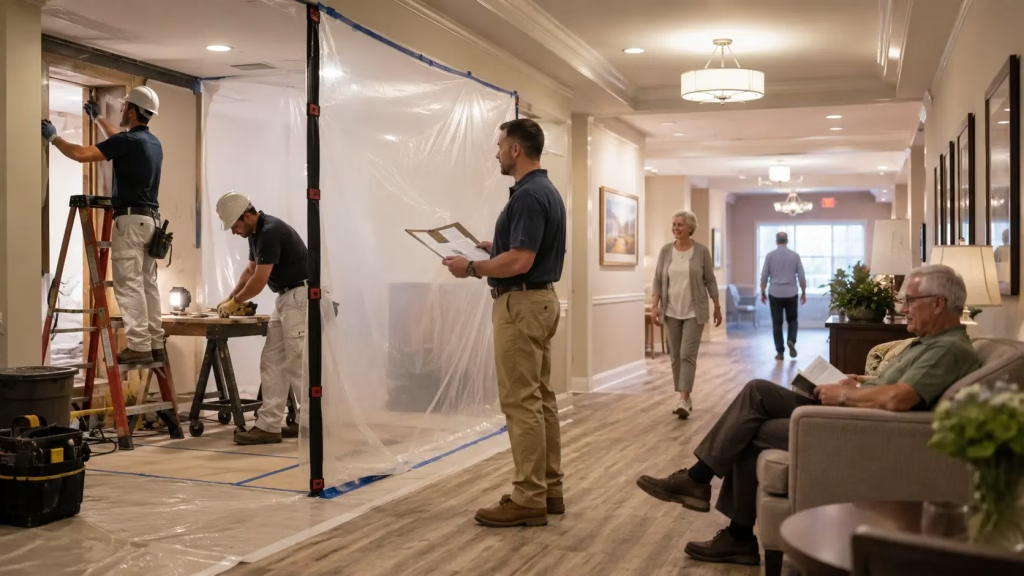
Work is grouped by trade and by building so crews complete several items in one visit. Repairs in occupied areas are scheduled around resident routines, and organizations with more than one campus receive a coordinated schedule across all locations.
Step 4: Document Everything in One Place
Every item is closed out through JDB Service Group’s work-order management process. Facility directors receive a record of what was completed in each building, along with a shutoff map that staff can use if a pipe breaks after hours.
Step 5: Check Back Through the Cold Season
The first hard freeze and the first major storm are good times to recheck lightly used buildings, heat trace, and roof drains. Service requests that come in during the winter are prioritized based on severity and contract terms.
When Outside Support Makes Sense for Campus Winterization
Most in-house maintenance teams handle daily requests well. Winterization is different because it puts several trades, every building, and a hard deadline into the same few weeks. Outside support makes sense when the campus has more buildings than staff hours, or when the work crosses heating, plumbing, roofing, and grounds at once.
JDB Service Group works alongside in-house staff for organizations in Montgomery County and throughout Bucks, Chester, Delaware, and Philadelphia Counties. Our team has maintained institutional facilities in the region since 1998.
JDB Service Group has provided commercial property maintenance across southeastern Pennsylvania since 1998. For campuses with several buildings, the company completes winterization before the first freeze, schedules work around resident routines, and gives facility directors a building-by-building record of every repair and shutoff location.
Frequently Asked Questions
What should a commercial building winterization checklist include?
A commercial building winterization checklist should include heating system service, freeze protection for pipes and exterior water lines, roof and gutter drainage, door and window sealing, generator and emergency lighting tests, and a snow and ice plan. JDB Service Group works through each of these items for institutional facilities across southeastern Pennsylvania and records the results in one work-order list.
When should you winterize a commercial building in Pennsylvania?
Winterization should start in September and be finished before the first freeze. In southeastern Pennsylvania, suburban areas in Montgomery, Bucks, and Chester Counties can reach freezing in late October. JDB Service Group schedules winterization for senior living, behavioral health, and human services campuses early in the fall so repairs are complete before cold-weather demand peaks.
How do you protect lightly used buildings on a campus during winter?
Lightly used buildings need working heat, low-temperature alarms, drained exterior water lines, and regular checks during cold snaps. A heating failure in a building that is closed for the weekend can go unnoticed long enough for pipes to freeze. JDB Service Group includes these buildings in every campus walkthrough across southeastern Pennsylvania and rechecks them after the first hard freeze.
Get Your Campus Ready Before the First Freeze
JDB Service Group helps facility directors at senior living, behavioral health, and human services organizations across southeastern Pennsylvania prepare every building on campus for winter. Contact us to schedule a campus walkthrough.