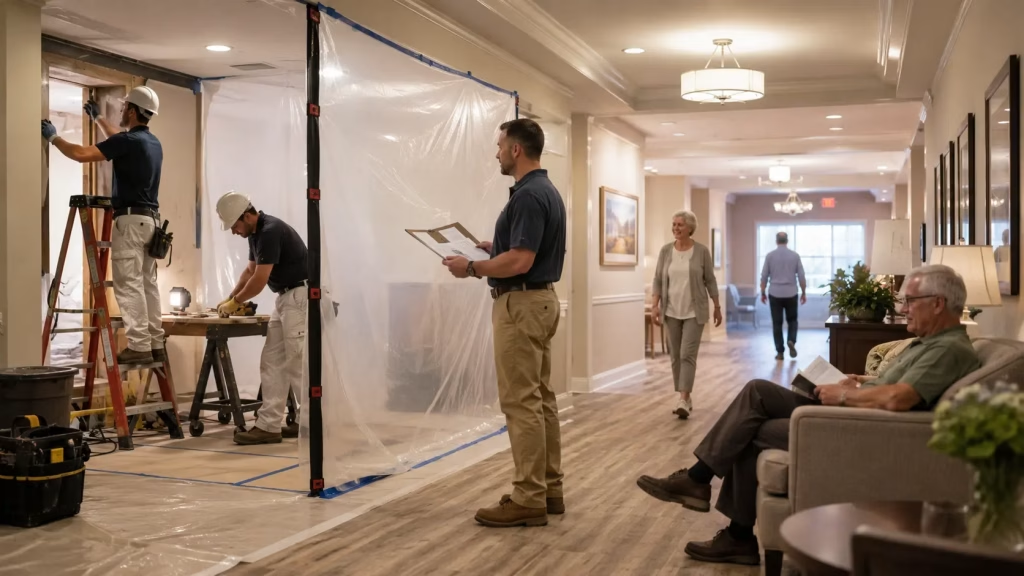
A building renovation in an occupied facility should be planned around phased work zones, resident safety, dust and noise control, and clear communication with staff before any demolition begins. JDB Service Group plans and coordinates occupied building renovation for senior living communities, behavioral health centers, and IDD residential programs across southeastern Pennsylvania, sequencing the work so residents stay in place and daily operations continue.
Why Renovating Occupied Buildings Requires a Different Plan
A building renovation in an empty structure is a scheduling problem. A building renovation in an occupied facility is an operations problem. Residents live on site, staff deliver care on a fixed daily schedule, and state licensing standards apply the entire time the work is underway.
For senior living communities, behavioral health centers, and IDD residential programs, the constraint is not just finishing on time. It is keeping bedrooms, dining areas, medication rooms, and exits usable while a section of the building is torn open. JDB Service Group approaches occupied building renovation as a licensed general contractor that also runs ongoing commercial property maintenance programs for institutional clients, so the renovation plan is built around how the building actually operates each day.
A Step-by-Step Approach to Occupied Building Renovation
Renovating occupied buildings without disruption comes down to sequence. Each step below reduces the impact of the work on residents and staff before the next phase begins. JDB Service Group follows this order on facility renovation projects for institutional clients across the region.
Step 1 – Walk the Building and Map the Constraints
The plan starts with a site walk that documents resident room locations, care schedules, exit routes, mechanical rooms, and the areas that cannot be taken offline at any point. These constraints shape the entire renovation timeline, so they are recorded before scope or budget is finalized.
Step 2 – Divide the Work Into Phased Zones
The renovation is broken into zones so that only one section of the building is under construction at a time. Residents and staff continue using the rest of the facility while a single wing, floor, or common area is worked on, then the crew moves to the next zone once the first is closed out.
Step 3 – Set Up Containment, Exits, and Safe Routes
Before demolition, the active work zone is sealed off with temporary partitions, and alternate routes are established for residents and staff. Exit access, corridor width, and fire-safety requirements are maintained throughout, since a renovation cannot compromise the licensing standards a facility operates under.
Step 4 – Control Dust, Noise, and Air Quality
Occupied facility renovation calls for active dust barriers, negative-air containment where needed, and scheduling of the loudest work around resident routines such as meals, rest periods, and therapy sessions. This step protects vulnerable residents and keeps the rest of the building comfortable.
Step 5 – Communicate the Schedule to Staff and Families
Facility directors and their staff receive a phase-by-phase schedule so they know which areas are affected and when. Clear communication ahead of each phase prevents last-minute disruptions to care delivery and gives families accurate information when they ask.
Step 6 – Close Out Each Phase Before Moving On
Each zone is cleaned, inspected, and returned to full use before the next phase begins. Closing out phase by phase keeps the footprint of active construction small and gives the facility usable space back at every stage rather than at the end of the project.
Common Challenges When Renovating Occupied Buildings
Most disruption on an occupied renovation traces back to a small number of predictable problems. Planning for them in advance is the difference between a project residents barely notice and one that interferes with daily care.
- Dust and airborne debris reaching resident living and dining areas
- Noise from demolition or heavy work colliding with rest and therapy schedules
- Blocked or narrowed exit routes that affect fire-safety compliance
- Loss of a shared space, such as a dining room or activity room, with no interim alternative
- Utility shutoffs affecting occupied areas of the building
- Staff and families receiving no advance notice of which areas are affected
Each of these is manageable when it is addressed in the plan rather than in the middle of the project. A phased schedule with containment and communication built in resolves most of them before the first wall comes down.
How JDB Service Group Plans a Facility Renovation Around Residents
Facility renovation planning at JDB Service Group is built around keeping the building operational. Because the company already provides ongoing maintenance for many of the same facility types, the renovation plan accounts for how each space is used before the schedule is set.
Operational Assessment
The project begins with a review of resident schedules, staffing patterns, and the spaces that must stay available. This assessment determines how the building is divided into work zones and which hours are available for the noisiest tasks.
Phased Scope and Documentation
Scope is organized zone by zone and documented through JDB Service Group’s work-order management process, giving facility directors a clear record of what work happens in each area and when, which supports both budgeting and licensing documentation.
Coordination With Facility Staff
Throughout the renovation, JDB Service Group coordinates directly with facility directors and operations staff so that each phase aligns with care delivery. Adjustments to the schedule are made in advance rather than after a conflict appears.
When to Start Planning an Occupied Building Renovation
Facility renovation planning should begin well before the intended start date, because the phasing, containment, and communication steps take longer to arrange in an occupied building than the construction itself. Starting early gives a facility time to sequence the work around its calendar rather than forcing care schedules to bend around the construction.
JDB Service Group plans and coordinates building renovation for institutional clients in Montgomery County and the surrounding region, structuring each project around the facility’s operations rather than a fixed construction template.
Frequently Asked Questions
Can a building renovation be done while a facility is still occupied?
Yes. An occupied building renovation is completed by dividing the work into phased zones so only one section is under construction at a time while residents use the rest of the facility. JDB Service Group plans this sequencing for senior living communities, behavioral health centers, and IDD residential programs across southeastern Pennsylvania, keeping exits, dining areas, and resident rooms usable throughout the project.
How do you control dust and noise when renovating occupied buildings?
Dust and noise are controlled with temporary partitions, negative-air containment where needed, and scheduling of loud work around resident routines such as meals, rest, and therapy. JDB Service Group builds these controls into the renovation plan before demolition begins so that occupied areas of the facility stay comfortable and safe for residents and staff during the work.
How far in advance should facility renovation planning begin?
Facility renovation planning should begin well before the intended start date, because phasing, containment, and staff communication take longer to arrange in an occupied building than the construction work itself. JDB Service Group, a licensed general contractor serving southeastern Pennsylvania since 1998, recommends early planning so the schedule can be sequenced around a facility’s care calendar rather than the reverse.
Plan a Renovation That Keeps Residents in Place
JDB Service Group plans and coordinates building renovation and occupied facility construction for facility directors managing senior living, behavioral health, and human services properties across southeastern Pennsylvania, as part of its commercial property maintenance programs and construction services.