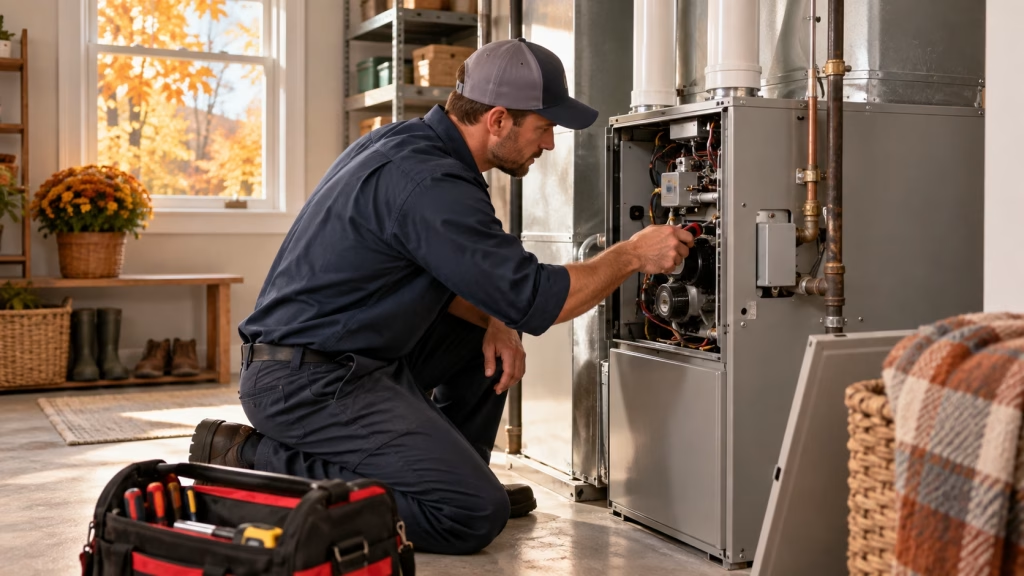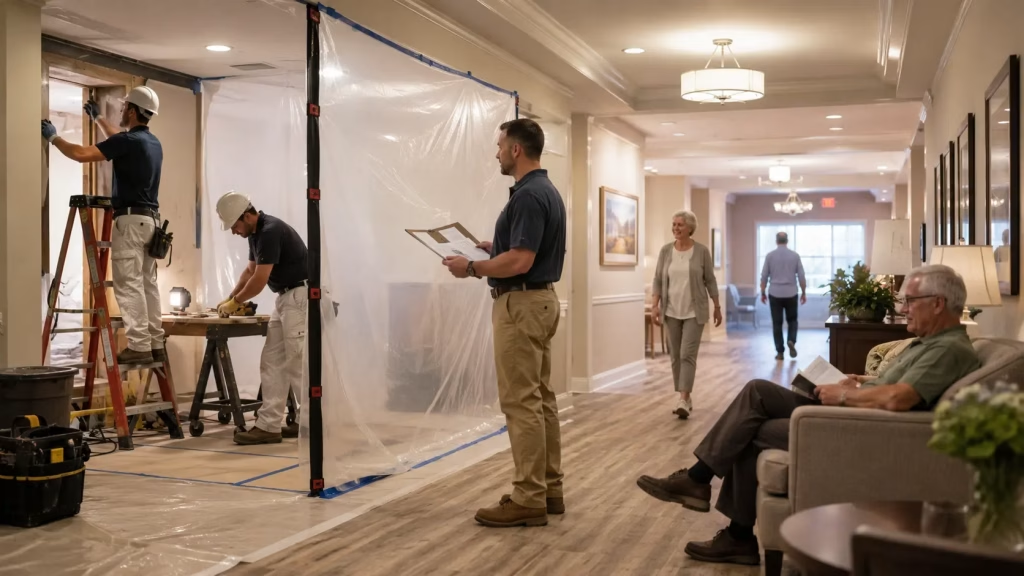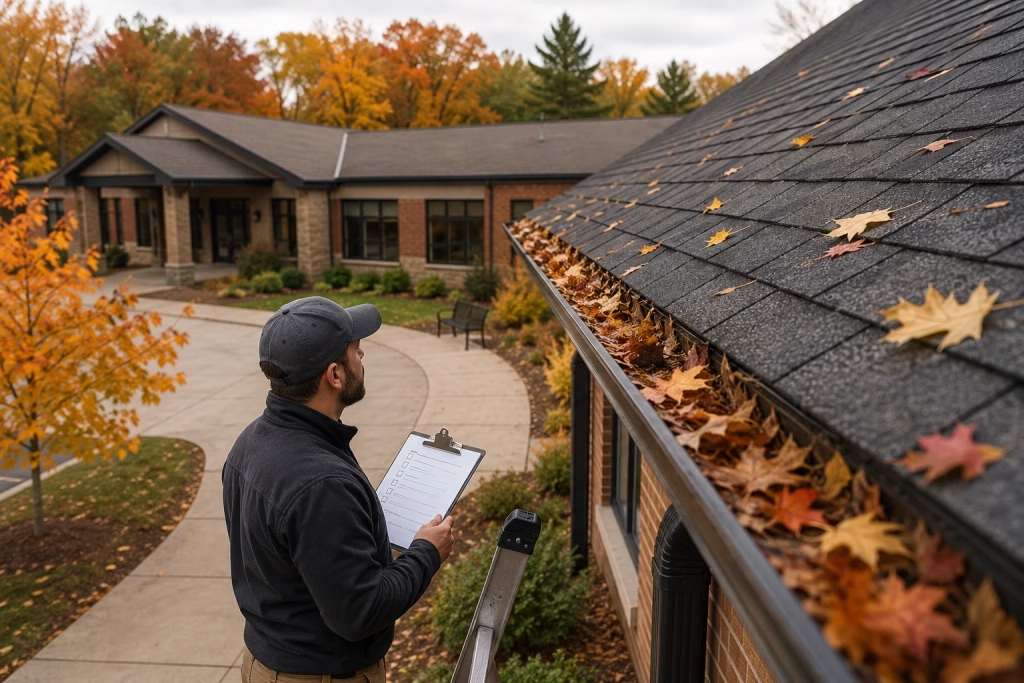
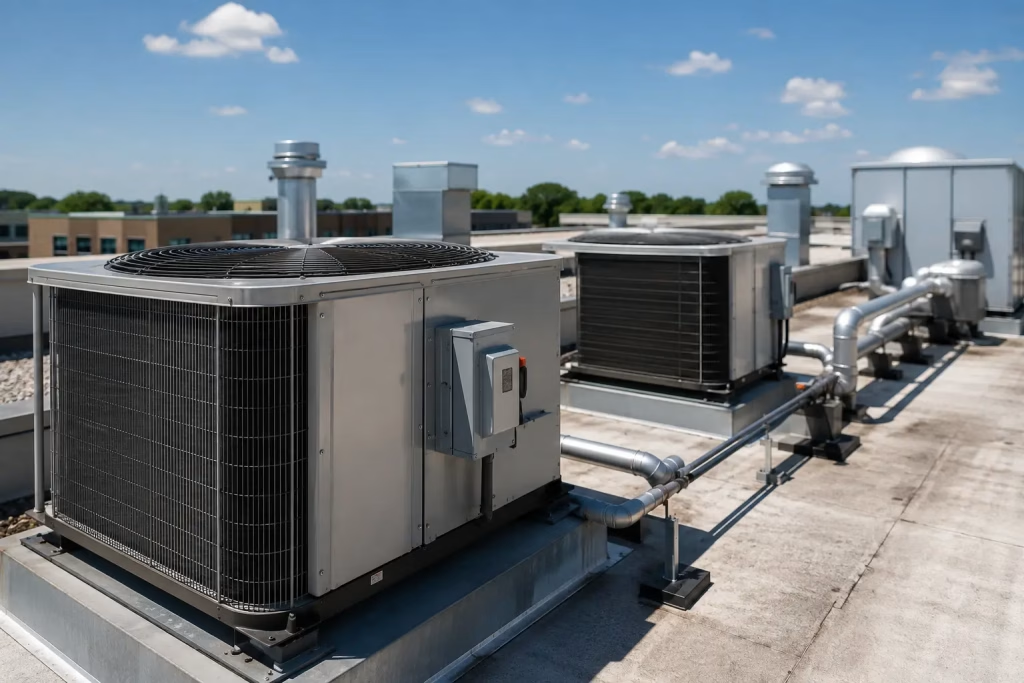
An HVAC system showing weak airflow, short cycling, unusual noise, refrigerant symptoms, or climbing energy use is at risk of failing under sustained extreme heat. This guide explains the five warning signs facility managers should check before a heat wave arrives, and the HVAC maintenance steps to complete this week. JDB Service Group maintains commercial HVAC systems for institutional facilities across southeastern Pennsylvania.
Heat waves are when marginal equipment fails. A rooftop unit that limps through an 85-degree afternoon can shut down entirely after three consecutive days above 95, because compressors, condensers, and motors run at maximum load with no overnight recovery. For senior living communities, behavioral health centers, and human services facilities, a cooling outage is a resident-safety event, not an inconvenience.
The good news is that most heat-wave failures announce themselves in advance. The five signs below can be checked in a single walkthrough. If any of them appear, our commercial HVAC maintenance services team can inspect and correct the issue before the forecast turns.
Warning Sign 1: Weak or Uneven Airflow at the Registers
Weak airflow usually points to clogged filters, failing blower motors, or duct restrictions. Any of these forces the system to run longer to hit setpoint, which accelerates wear during high-demand periods. If some rooms cool and others do not, the system is already struggling at moderate loads and is unlikely to keep up when outdoor temperatures peak.
Walk the facility and hold a hand at supply registers in at least three zones. Compare the airflow to what you would expect from a healthy system. Note any rooms that occupants report as consistently warm, because those complaints often surface weeks before a mechanical failure does.
Warning Sign 2: Short Cycling
Short cycling means the unit starts, runs briefly, and shuts off before completing a full cooling cycle. Common causes include low refrigerant, an oversized or failing compressor, dirty condenser coils, or a faulty thermostat. Each start puts the highest electrical and mechanical stress on the compressor, so a short-cycling unit is consuming its remaining lifespan quickly.
Listen near the unit for 15 to 20 minutes during the warmest part of the day. A healthy system in hot weather should run in long, steady cycles. Frequent starts and stops in that window are a strong signal that the unit needs professional attention before sustained heat arrives.
Warning Sign 3: New or Changing Mechanical Noise
Grinding, screeching, rattling, or banging sounds indicate mechanical components approaching failure. Screeching often means a failing belt or motor bearing. Grinding suggests bearing wear inside the blower or compressor. Rattling can indicate loose panels, failing mounts, or debris in the condenser fan. None of these correct themselves, and all of them worsen under continuous load.
Have building staff report any sound that is new or louder than it was last month. A bearing that has been squealing for two weeks in mild weather is a strong candidate for full failure during the first extended stretch of 95-degree days.
Warning Sign 4: Ice, Hissing, or Warm Supply Air
Ice on refrigerant lines, hissing near the unit, or supply air that feels cool but not cold are classic symptoms of low refrigerant or a developing leak. A system low on refrigerant can maintain comfort in mild conditions and then lose capacity exactly when demand peaks. Running a low-charge system hard also risks compressor damage, which turns a moderate HVAC repair into a major equipment replacement.
Refrigerant diagnosis and recharge require an EPA-certified technician, so this sign always means scheduling service rather than monitoring. Facilities enrolled in our preventive maintenance programs have refrigerant levels and coil condition checked on a scheduled basis, which is how these issues get caught before summer.
Warning Sign 5: Rising Energy Use Without a Rising Load
Compare this month’s electricity usage to the same month last year. If consumption is up significantly and occupancy, hours, and setpoints have not changed, the HVAC system is working harder to deliver the same result. Declining efficiency typically traces to dirty coils, refrigerant loss, failing capacitors, or duct leakage, and it means the system has less reserve capacity for extreme heat.
Utility bills are one of the earliest and most objective warning signs available to a facility manager. A unit running at reduced efficiency in June often becomes the unit that trips out on high head pressure in July.
What to Do This Week
If a heat wave is in the forecast, the following steps can be completed within days and materially reduce failure risk.
- Replace all filters. Clogged filters are the single most common and cheapest cause of capacity loss.
- Clear the condensers. Remove debris, vegetation, and stored items within two feet of every outdoor unit, and rinse visibly dirty coils.
- Verify thermostat and controls. Confirm setpoints, schedules, and any building-automation overrides are correct for extended heat.
- Walk and listen. Complete a walkthrough checking the five signs above, and document anything abnormal with photos and notes.
- Schedule inspection for any flagged unit. A pre-season inspection typically costs a small fraction of an after-hours HVAC emergency repair during a regional heat event, when service demand spikes across every contractor in the market.
- Confirm your escalation path. Know who you call, what your contract covers, and how emergency requests are prioritized before you need the answer.
For multi-site organizations, coordinate this checklist across every property now rather than triaging failures building by building once the heat arrives. JDB Service Group coordinates this type of multi-site work for facility portfolios across Montgomery, Bucks, Chester, Delaware, and Philadelphia Counties, including properties in Abington and the surrounding area.
What a Heat-Wave Failure Looks Like in Practice
A common failure sequence starts with a dirty condenser coil. The coil cannot reject heat efficiently, so head pressure climbs as outdoor temperatures rise. On the second or third day of sustained heat, the compressor trips on its high-pressure safety, and the building loses cooling during the hottest hours of the afternoon.
At that point the facility manager is competing for service with every other building in the region experiencing the same conditions. Parts availability tightens, after-hours rates apply, and vulnerable occupants sit in rising indoor temperatures while the work is scheduled. The coil cleaning that would have prevented the sequence takes a technician under an hour during a routine visit.
This gap between prevention cost and failure cost is why JDB Service Group builds seasonal HVAC inspections into its maintenance contracts for institutional facilities. Our guide to what a facilities maintenance contract should cover explains how HVAC service fits into a broader maintenance agreement.
Frequently Asked Questions
How often should commercial HVAC maintenance be performed?
Commercial HVAC systems should receive professional preventive maintenance at least twice per year, with inspections scheduled before the cooling and heating seasons. High-occupancy institutional facilities often benefit from quarterly service. JDB Service Group structures HVAC maintenance schedules around each facility’s equipment age, occupancy type, and usage patterns, with filter changes and coil cleaning performed on a recurring calendar.
What should I do if my facility’s HVAC fails during a heat wave?
Report the failure through your maintenance provider’s emergency channel immediately and document the affected areas and indoor temperatures. Move vulnerable occupants to cooled zones where possible and deploy portable cooling if available. JDB Service Group prioritizes emergency service requests based on severity and contract terms, with cooling outages at occupied institutional facilities such as senior living communities treated as high-severity events.
Is it worth repairing an older HVAC unit before a heat wave, or should it be replaced?
Repair is usually the right short-term move when a heat wave is imminent, because replacement lead times for commercial equipment often run weeks or months. The longer-term decision depends on the unit’s age, repair history, and efficiency. JDB Service Group evaluates repair-versus-replace questions during inspections and provides facility managers with documented recommendations, so the replacement decision can be planned rather than forced by a failure.